

Welcome Message from the Dean
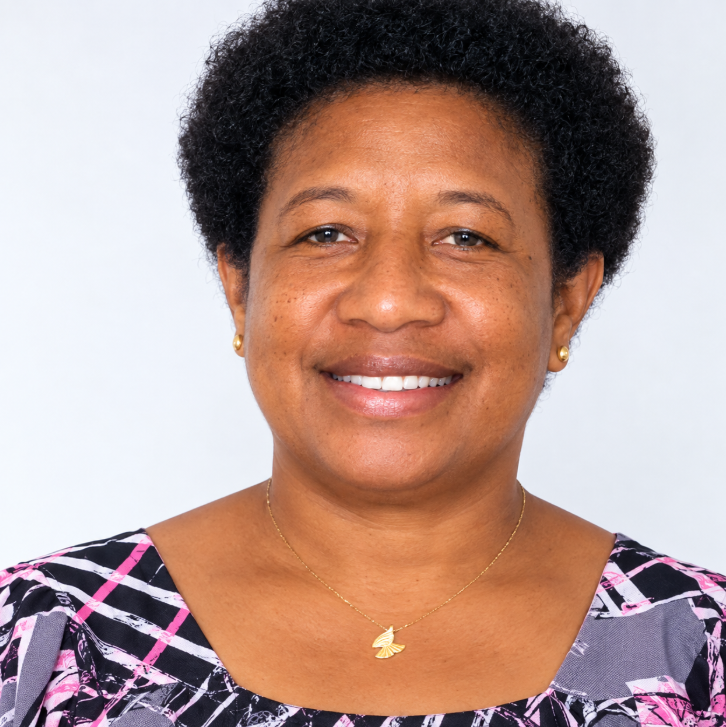
Welcome to the College of Arts, Sciences, and Education at the Innovative University of Enga.
It is my pleasure to welcome students, faculty, partners, and visitors to our academic community. Our College is committed to preparing the next generation of educators, scholars, and leaders who will contribute meaningfully to the future of Papua New Guinea.
A central mission of the College is the preparation of highly qualified primary school teachers who will serve communities across the nation. We believe that strong foundations in education begin with well-prepared teachers who are knowledgeable, reflective, and dedicated to the success of every child. Through rigorous training, practical classroom experience, and a commitment to service, our teacher education programs aim to strengthen primary education throughout Papua New Guinea.
At the same time, the College provides undergraduate education grounded in the liberal arts tradition. Our programs in English, Mathematics, Biology, Chemistry, and Physics cultivate intellectual curiosity, critical thinking, and scientific understanding. We strive to equip students with the knowledge, analytical skills, and ethical awareness needed to address the challenges of a rapidly changing world.
Our faculty members are committed to excellence in teaching, research, and community engagement. Together, we seek to create an environment where students are encouraged to ask questions, pursue discovery, and apply their learning in ways that benefit their communities and the nation.
Whether you are a prospective student, a current member of our university, or a visitor exploring our work, I invite you to learn more about the programs and opportunities available within the College of Arts, Sciences, and Education.
We are proud to be part of the Innovative University of Enga and proud to contribute to the development of education and knowledge in Papua New Guinea.
Sincerely,
Department of Education
Are you ready to take the next step toward your future career?
Bachelor of Education in Early Childhood Education [B.Ed.]
Overview
Why Study This Course?
- Early childhood is the most critical stage for cognitive, emotional, and social development.
- High demand for qualified early childhood teachers in PNG’s growing education sector.
- Practical, hands-on learning through real-world teaching placements.
- Emphasis on culturally responsive education reflecting PNG’s diversity.
- Opens pathways to leadership, curriculum design, and educational advocacy in early childhood.
Key Learning Outcomes
Graduates will be able to:
- Apply knowledge of child growth, development, and learning theories to early childhood practice.
- Design, implement, and evaluate play-based and inquiry-driven learning experiences.
- Create safe, inclusive, and culturally relevant early learning environments.
- Integrate health, nutrition, and well-being into early childhood education practices.
- Partner effectively with families and communities to support children’s development.
- Conduct research and apply evidence-based approaches in early childhood teaching.
- Demonstrate professional ethics, leadership, and reflective practice.
Duration & Study Mode
Duration:
4 years full-time (8 semesters) or up to 8 years part-time.
Mode:
On-campus delivery with lectures, workshops, tutorials, school visits, and practicum placements.
entry requirements
School Leavers
- Have a minimum GPA of 2.8
- Grade 12 Higher School Certificate or equivalent with:
- B grade or better in English
- B grade is better in General Mathematics or higher
- C grade or better in Science and Social Science subjects
Non-School Leavers
- Have a minimum GPA of 2.8
- A diploma in Early Childhood Education or Primary Education may be considered for advanced standing.
Mature-age Entry
- Relevant work experience and successful completion of the university’s entry assessment.
Programme Structure / Course Curriculum
Foundations of Education & Child Development
- Introduction to Education in PNG
- Foundations of Early Childhood Education
- English Communication for Teachers
- PNG Studies & Culture
- Child Development I (0–3 years)
- Mathematics for Early Learning
Pedagogy, Play & Curriculum
- Educational Psychology for Early Learners
- Play-Based Learning & Creative Arts in ECE
- Language & Literacy Development in Early Childhood
- Science & Environment for Young Learners
- Curriculum Design & Assessment in ECE
- Child Development II (3–8 years)
Inclusive Education & Practicum I
- Inclusive Education for Early Learners
- Health, Nutrition & Safety in Early Childhood
- Educational Research Methods I
- ICT Integration in Early Childhood Learning
- Practicum I – Supervised Placement in ECE Centre
- Family & Community Engagement in Education
Advanced Practice, Research & Practicum II
- Educational Leadership in ECE
- Advanced Curriculum Innovation in Early Learning
- Educational Research Methods II & Capstone Project
- Practicum II – Extended Supervised Placement
- Professional Ethics & Reflective Practice in ECE
Course Modules / Subjects Offered
- Foundations of Early Childhood Education
- Child Development I & II
- Play-Based Learning & Creative Arts
- Language & Literacy Development
- Mathematics, Science & Environment for Young Learners
- Curriculum Design & Assessment in ECE
- Inclusive Education for Early Learners
- Health, Nutrition & Safety in ECE
- Family & Community Engagement
- ICT in Early Childhood Learning
- Educational Leadership in ECE
- Capstone Research Project
- Practicum I & II
Assessment Methods
Written assignments and essays
Lesson and activity plans
Practical teaching demonstrations
Practicum performance evaluations
Research project and report
Portfolios and reflective journals
Oral presentations and seminars
Career Opportunities
Graduates can work as:
- Early Childhood Educators (ECE centres, preschools, lower primary classes)
- Curriculum developers for early learning
- Education officers in government and NGOs
- Child development consultants
- ECE programme coordinators or centre directors
- Researchers in early childhood education
Tuition Fees
- Fees are charged per semester according to the IUE fee schedule.
- Additional costs for practicum travel, materials, and resources may apply.
Scholarships (If any available in PNG – List those)
DHERST TESAS (HECAS & AES)
- for eligible students.
IUE Merit Scholarships
- for outstanding academic performance.
External sponsorships
- from NGOs and education-support agencies.
How to Apply
School Leavers
Apply through the DHERST National Online Selection System (NOSS).
Non-School Leavers
Apply directly to the IUE Admissions Office with certified copies of transcripts and other required documents.
Mature-age Applicants
Submit the application with proof of work experience and sit for the entry assessment if required.