

Welcome Message from the Dean
Welcome to the College of Arts, Sciences, and Education at the Innovative University of Enga.
It is my pleasure to welcome students, faculty, partners, and visitors to our academic community. Our College is committed to preparing the next generation of educators, scholars, and leaders who will contribute meaningfully to the future of Papua New Guinea.
A central mission of the College is the preparation of highly qualified primary school teachers who will serve communities across the nation. We believe that strong foundations in education begin with well-prepared teachers who are knowledgeable, reflective, and dedicated to the success of every child. Through rigorous training, practical classroom experience, and a commitment to service, our teacher education programs aim to strengthen primary education throughout Papua New Guinea.
At the same time, the College provides undergraduate education grounded in the liberal arts tradition. Our programs in English, Mathematics, Biology, Chemistry, and Physics cultivate intellectual curiosity, critical thinking, and scientific understanding. We strive to equip students with the knowledge, analytical skills, and ethical awareness needed to address the challenges of a rapidly changing world.
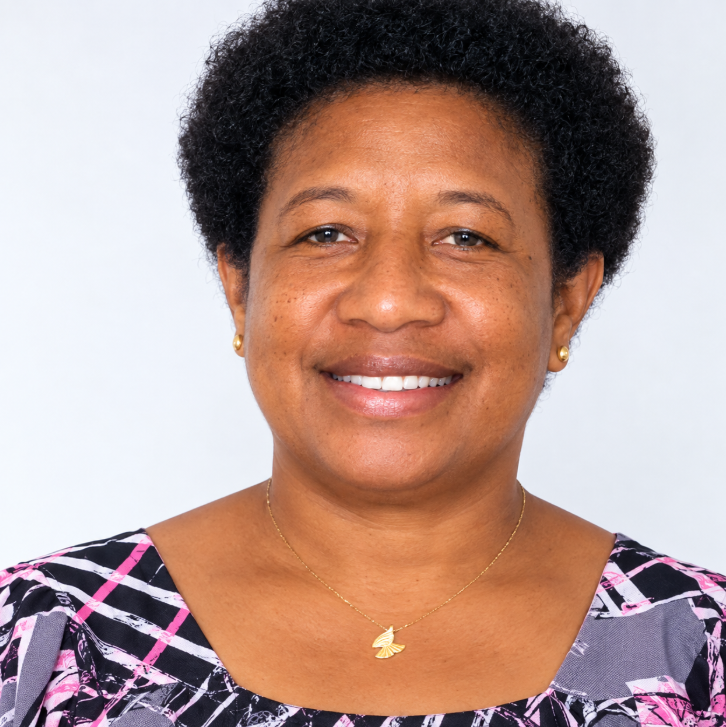
Our faculty members are committed to excellence in teaching, research, and community engagement. Together, we seek to create an environment where students are encouraged to ask questions, pursue discovery, and apply their learning in ways that benefit their communities and the nation.
Whether you are a prospective student, a current member of our university, or a visitor exploring our work, I invite you to learn more about the programs and opportunities available within the College of Arts, Sciences, and Education.
We are proud to be part of the Innovative University of Enga and proud to contribute to the development of education and knowledge in Papua New Guinea.
Sincerely,
Departments of Education
Are you ready to take the next step toward your future career?
Bachelor of Science in Biology [B.Sc.]
Overview
The Bachelor of Science in Biology at the Innovative University of Enga is a four-year undergraduate programme (PNG NQF Level 7) that provides a comprehensive understanding of living organisms, their structure, function, evolution, and interactions with the environment. The programme covers key disciplines including cell and molecular biology, genetics, microbiology, ecology, plant and animal sciences, and environmental biology. It emphasises both theoretical knowledge and practical laboratory and field skills relevant to Papua New Guinea’s biodiversity, conservation priorities, and applied science needs. Graduates will be prepared for careers in research, conservation, environmental management, health sciences, and education, or for progression to postgraduate study.
Why Study This Course?
- PNG is one of the most biologically diverse countries in the world, offering unique opportunities for field research and conservation.
- Addresses national priorities in health, environment, agriculture, and sustainable development.
- Equips students with skills applicable to laboratory, field, and policy-making roles.
- Builds competencies for international scientific collaboration and postgraduate research.
Key Learning Outcomes
Graduates of the programme will be able to:
- Apply biological concepts, theories, and methods to investigate and solve real-world problems.
- Design and conduct laboratory and field experiments, collect data accurately, and analyse results.
- Use scientific and statistical tools to interpret biological data.
- Evaluate biodiversity, ecological systems, and conservation strategies, especially within PNG’s context.
- Communicate scientific findings clearly to professional and general audiences.
- Demonstrate ethical, safe, and environmentally responsible practices in research and professional activities.
Duration & Study Mode
Duration:
4 years full-time (8 semesters) or up to 8 years part-time.
Study Mode:
On-campus delivery with lectures, tutorials, supervised laboratory work, extensive fieldwork, and independent study.
entry requirements
School Leavers:
- B grade or better in Biology and Advanced Mathematics (A) or General Mathematics (B)
- B grade or better in English
- B grade or better in Chemistry preferred
- Minimum GPA of 2.8
Non-School Leavers:
- A diploma in Biology, Science, or a related discipline may be considered for credit transfer.
Mature-age Entry:
- Relevant work experience and successful completion of the university’s entry assessment process.
Course Curriculum
Foundational sciences and introductory biology
- General Biology I & II
- Chemistry for Biology
- Mathematics for Science
- Academic Writing & Communication Skills
- ICT Applications for Science
Core biological concepts and laboratory techniques
- Cell Biology
- Genetics I
- Microbiology I
- Ecology I
- Plant Biology
- Animal Biology
Advanced topics and applied biology
- Genetics II
- Microbiology II
- Ecology II (Applied Ecology & Conservation)
- Molecular Biology & Biotechnology
- Environmental Biology
- Research Methodology
Research and professional preparation
- Advanced Topics in Biology (e.g., Marine Biology, Parasitology, Agricultural Biology)
- Conservation Biology
- Professional Practice & Ethics in Science
- Final Year Research Project
- Electives (Public Health Biology, Bioinformatics, Environmental Impact Assessment)
Course Modules
- General Biology I & II
- Cell Biology
- Genetics I & II
- Microbiology I & II
- Ecology I & II
- Plant Biology
- Animal Biology
- Molecular Biology & Biotechnology
- Environmental Biology
- Conservation Biology
- Advanced Topics in Biology
- Research Project in Biology
Assessment Methods
Written examinations (theory and problem-solving)
Laboratory and field practical reports
Research project thesis and oral defence
Assignments, case studies, and literature reviews
Oral presentations and seminars
Career Opportunities
Graduates may work in:
- Conservation and environmental management agencies
- Research institutions and laboratories
- Agriculture, forestry, and fisheries sectors
- Health and medical research organisations
- Secondary and tertiary education
- Government agencies (environment, health, agriculture)
- NGOs involved in biodiversity conservation and community development
Tuition Fees
- Tuition fees are charged per semester according to the IUE fee schedule.
- Additional laboratory and fieldwork fees apply.
Scholarships (If any available in PNG – List those)
DHERST TESAS
- Available for eligible school leavers (HECAS & AES).
IUE Merit Scholarships
- Awarded annually to high-achieving students.
Industry or NGO Sponsorships
- Possible for students specialising in conservation or applied biological sciences.
How to Apply
- School Leavers: Apply through the DHERST National Online Selection System (NOSS).
- Non-School Leavers: Apply directly to the IUE Admissions Office.
- Submit certified copies of academic transcripts, identification documents, and other required forms.